AI in Banking: Why Governance, Not Hype, Will Determine Banking's Winners
Community banks are moving quickly from AI experimentation to real-world deployment. But as use cases expand, the institutions that benefit most won't be those with the most AI—they'll be the ones with the right controls, governance, and operational foundation to scale it responsibly.
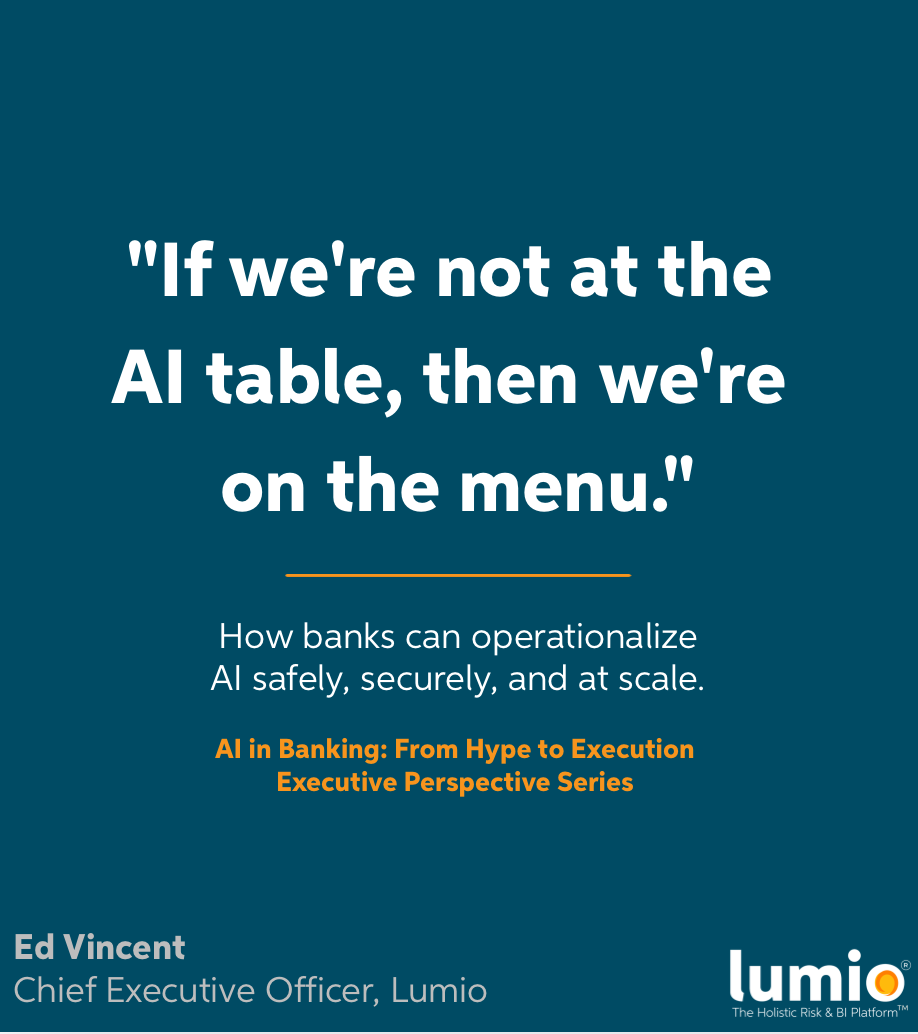
“If we are not at the AI table, then we are on the menu,” observed a community bank CEO. A seat at the table can yield significant financial benefits, with direct NIM implications. For example, within three months of deploying a set of agents, a mid-size bank CFO eliminated $200K/month of back-office activities previously outsourced to an offshore partner.
On the other hand, without the right guardrails in place, AI can quickly surprise a bank with an outsized expense. A CTO recently equipped a team of engineers with AI tools to accelerate software development…only to discover that without boundaries in place, one individual consumed the entire firm’s 6 months’ worth of tokens, in the span of 3.5 hours.
Smartly structuring the use of AI agents is a skill itself…for example, equipping a manager agent with the skills to understand the business problem, along with access to find work already completed by other agents, reduces compute requirements…and the associated costs.
Without question, all banks benefit from experimenting with AI, in a controlled manner. When it comes to scaling and productionizing AI though, banks would be well-served to consider experienced partners and platforms, such as Fiserv’s agentOS, who will ensure the right throttles, approvals, and cost-effective architecture are in place before the dinner check arrives.
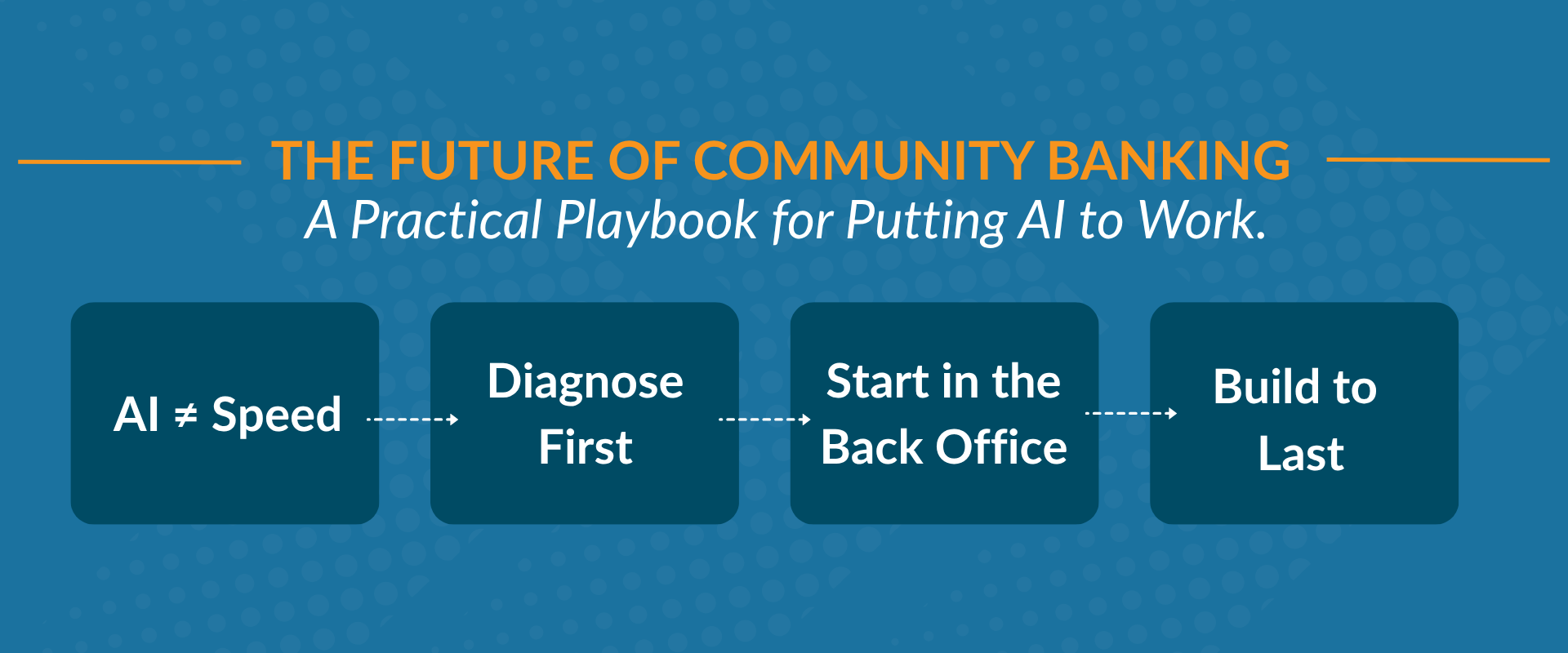
As institutions move beyond experimentation, many are realizing that AI alone is not the strategy. The real challenge is operationalizing intelligence across workflows, decisions, data sources, and governance structures in a way that produces measurable outcomes. That operational layer — connecting insight to action — may ultimately become more important than the models themselves.