What Makes a Bank a Bank? Four Lessons From the Fintech Charter Rush
A Banking on Data conversation with Phil Goldfeder, CEO, American Fintech Council
It's easy to get fixated on the shrinking number of community banks. Phil Goldfeder, CEO of the American Fintech Council, offers a more useful question: not how many survive, but which ones understand what actually makes them valuable — in a market where a growing share of financial companies are working to become banks themselves.
This is the second of two conversations on the future of community banking. Where Ed Vincent and Joe Berry of KBW focused on what community banks already have, this one gets into what they do with it — and why the future isn't banks versus fintech, but the two together, done responsibly.
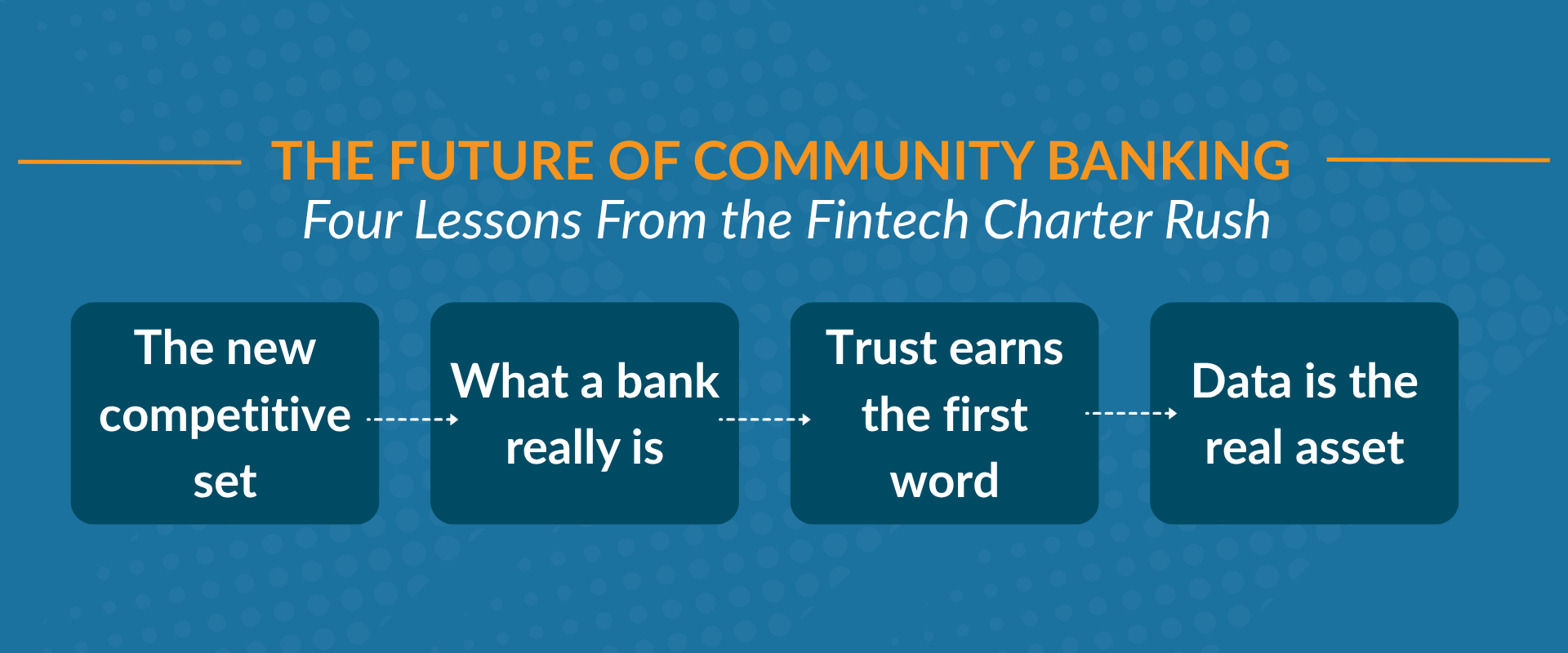
1. The competitive set now includes the fintechs trying to become banks
A wave of fintech companies — spanning buy-now-pay-later, digital assets, and other verticals —are actively pursuing bank charters. That's a healthy sign: it means there's a level playing field, and anyone who wants to operate as a bank has to earn the same charter through the same process. But it also means those companies inherit everything the charter carries — direct regulatory oversight, examiner relationships, and compliance obligations they've never faced as a bank's partner.
Companies that treat this as just another product launch tend to fail. The ones built to last —Goldfeder points to examples like Upstart and Mercury — invest early in the compliance infrastructure and cultural shift the charter demands, rather than letting the pace of innovation outrun their understanding of the core banking business.
2. A bank isn't a lender or a ledger
Ask what a bank actually is, and the instinct is to answer with products: a place to deposit money, get a loan, run a ledger. Goldfeder's answer skips the products entirely. What a bank brings is trust and reliability, built over time through cadence and consistency — showing up the same way, delivering the same experience, week after week, decade after decade.
That framing explains why community banks with 100-year histories still hold real leverage against institutions spending billions on innovation. The trust isn't a byproduct of scale. It's a byproduct of consistency sustained over time — something no amount of capital can shortcut.
3. Trust earns the first conversation, not a free pass
Local relationships earn a community bank the first conversation with a customer or prospect. They can also earn the last chance to keep that relationship when a customer is shopping around. What they don't earn is a free pass. Customers now expect a community banker to bring the same caliber of insight and value as a banker at a national institution — regardless of who has the longer history in town.
That's the flip side of “competition breeds excellence”: the institutions that thrive are the ones combining their built-up trust with the technology and data discipline to actually deliver on it — not the ones assuming relationship history is enough on its own.
4. The real asset isn't the product
Strip away the specific product — a loan, a savings account, a payment plan — and what's left is an institution that earned a customer's trust in one area and can extend it across others. That's true whether you call the result a bank, a fintech, or something in between. The relationships, and the data those relationships generate, are what create new value — always with the customer's trust and permission, never around them. Handled that way, it's an asset no competitor can manufacture; handled carelessly, it's the one thing a bank can't rebuild.
For community banks, this reframes the competitive question entirely. It's not “how do we compete with a national brand's technology budget.” It's “how do we turn the relationships and data we already have into the same kind of value a fintech is trying to build from scratch.”
A practical starting point
For community bank leaders looking to act on this conversation:
• Audit whether your institution is actually delivering on trust and reliability with the cadence and consistency customers expect — not just assuming legacy relationships are enough.
• Evaluate technology and fintech partners not only on capability, but on whether they understand and respect the regulatory responsibility that comes with operating as, or alongside, a bank.
• Treat the data your existing relationships generate as an asset to act on responsibly, not a byproduct — and build the infrastructure to trust it and use it well.
• Recognize that responsible innovation runs both directions: fintechs have to earn the trust a charter demands, and banks have to embrace innovation without losing sight of their core.
The number of community banks will keep shifting. What determines who's still standing isn't the count— it's whether an institution understands that its real asset was never the product. It was always the trust.
This article draws on a conversation between Ed Vincent and Phil Goldfeder, CEO of the American Fintech Council, on the Banking on Data podcast. Listen to the full episode on the Lumio website and YouTube. To learn more about how Lumio helps community banks turn trusted data into confident decisions, visit lumiosolutions.io.